
The Okefenokee Swamp is not just a place on a map it’s one of the last truly wild corners of the American South. Straddling the Georgia–Florida border, this 438,000-acre blackwater wilderness is home to an astonishing cast of creatures that have called these tannic waters and ancient cypress forests home for thousands of years.
If you’ve ever wondered what you’ll actually see when you visit, this guide is for you. No vague promises just an honest, up-close look at the wildlife that makes the Okefenokee one of the most spectacular nature destinations in the Southeast.
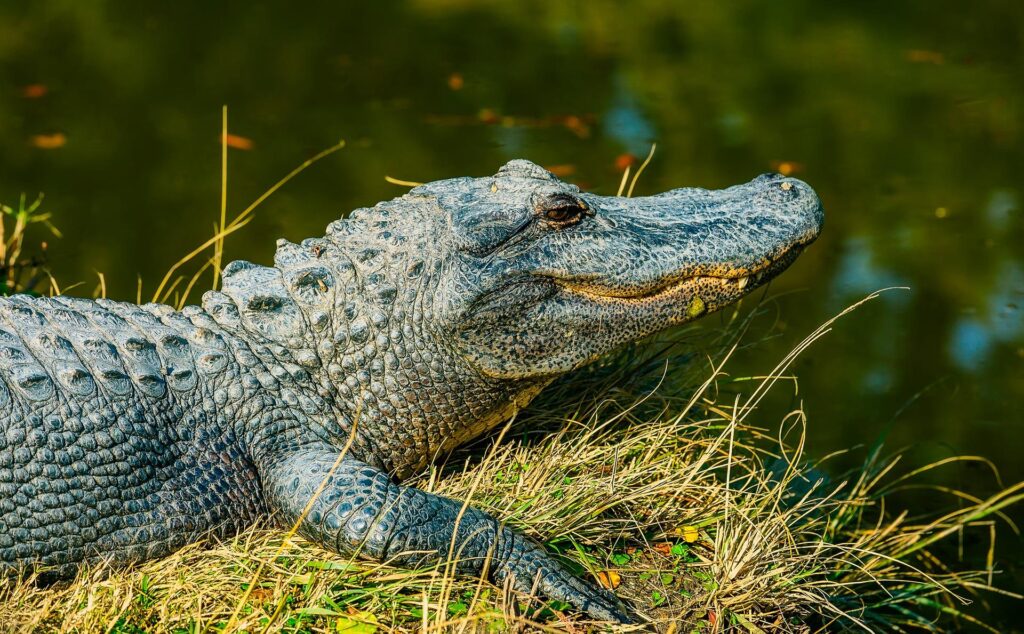
1. American Alligators: The Kings of the Swamp
There’s no dancing around it the American alligator is the undisputed star of the Okefenokee. With an estimated 12,000 to 15,000 alligators living within the refuge, this is one of the densest alligator populations in the country. You don’t come to the Okefenokee hoping to see an alligator. You come knowing you will.
These prehistoric reptiles can be spotted year-round, but summer and early fall bring the most activity as they bask along the banks of tea-colored waterways, float motionlessly in open prairies, and occasionally crawl across boardwalks. The largest males can exceed 13 feet in length and weigh over 500 pounds.
The dark, tannin-stained water that gives the swamp its name colored by decaying vegetation actually makes alligator-spotting easier. Their rough, knobby backs and amber eyes contrast vividly against the dark surface. A slow, quiet canoe or kayak trip through the interior is your best bet for close-up encounters.
Pro Tip: Early morning is prime alligator-watching time. They emerge to warm themselves in the sun before the heat of the day sets in.
2. Birds of the Okefenokee: A Birder’s Paradise
With over 233 recorded bird species, the Okefenokee is an absolute treasure for birdwatchers whether you’re a seasoned lister or a casual observer who simply appreciates something spectacular in flight.
Sandhill Cranes are among the most iconic residents. Their prehistoric bugling calls echo across the open prairies, and their 6-foot wingspans are a sight that stops visitors in their tracks.
Great Blue Herons and Great Egrets are virtually guaranteed sightings, stalking the shallows with slow, deliberate patience. Watch for the Anhinga sometimes called the “snakebird” as it perches on cypress knees with wings spread wide to dry.
For the lucky few, a visit might reveal the Red-cockaded Woodpecker, a federally endangered species that nests exclusively in old-growth longleaf pine and has found refuge in the Okefenokee’s managed upland areas.
Spring migration (April–May) and winter months bring additional species through the refuge, making every season rewarding for birdwatchers.
3. Black Water, Ancient Cypress & the Ecosystem Behind the Wildlife
To understand the wildlife, you need to understand the water. The Okefenokee’s signature black water isn’t murky it’s actually clear, stained a deep amber-brown by tannins released from decomposing plant matter. This chemical-rich water is low in nutrients and relatively acidic, creating a unique ecosystem that has shaped its residents over millennia.
Ancient bald cypress and blackgum trees draped in Spanish moss tower over the waterways, their “knees” rising from the waterline in ghostly formations. These trees provide nesting habitat for dozens of bird species, shelter for alligators and turtles, and a canopy that filters light into golden, cathedral-like rays.
The open prairie areas actually floating mats of peat vegetation support wading birds, otters, and alligators. This constant, slow movement is part of what makes the Okefenokee one of the most dynamic ecosystems in North America.
4. More Wildlife You Might Encounter
- Black Bears -The refuge supports a healthy black bear population. Sightings near forest edges and upland areas are not uncommon, especially at dawn and dusk.
- River Otters- Playful and fast, river otters dart through the waterways and are a delight to watch. Paddle quietly and you may see them hunting fish or rolling on the surface.
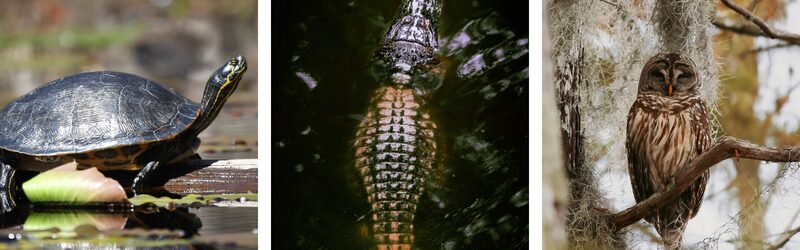
- Turtles- Multiple species including the Florida Cooter, Striped Mud Turtle, and Common Snapping Turtle can be seen basking on logs throughout the swamp.
- White-tailed Deer – Often spotted grazing at the edges of upland areas, particularly in the early morning and evening hours.
- Cottonmouth (Water Moccasin) – Yes, there are venomous snakes. Stay on boardwalks, keep a respectful distance, and enjoy them from afar they’re a vital part of the swamp’s food web.
5. When to Visit for the Best Wildlife Viewing
- Spring (March–May): Wildflowers bloom, migratory birds arrive, and alligator mating season begins complete with dramatic bellowing displays. Baby alligators hatch in late summer.
- Summer (June–August): Peak alligator activity. Water levels are typically higher, expanding accessible paddling areas.
- Fall (September–November): Cooler temperatures make hiking and paddling more comfortable. Sandhill cranes begin their return to winter grounds.
- Winter (December–February): Reduced crowds, excellent birding for wintering species, and surprisingly active wildlife on sunny days.
Whatever season you choose, plan to spend at least two days the swamp reveals itself slowly and generously to those who linger.
6. Okefenokee Pastimes Cabins & Campground: Your Perfect Wildlife Basecamp
Seeing the Okefenokee’s wildlife isn’t just about the hours you spend inside the refuge it’s about the entire experience, from the moment you arrive to the last star you see before sleep. That’s where Okefenokee Pastimes Cabins & Campground comes in.
Located just minutes from the refuge entrance, Okefenokee Pastimes is the ideal basecamp for wildlife enthusiasts, nature lovers, and families who want to go deep into the swamp experience without sacrificing comfort.
Cozy Cabins & Glamping Tents — After a long day of paddling through alligator territory or scanning the tree line for sandhill cranes, return to a well-appointed cabin or a glamping tent that blends the beauty of outdoor living with real comfort. Fall asleep to the sounds of frogs and crickets the Okefenokee’s own evening chorus.
Full-Service Campground — Prefer to be under the stars? Our campground puts you as close to the natural world as possible, with sites designed for tent campers and RVs alike.
Dark Sky Stargazing — The Okefenokee area is one of the darkest places in Georgia. With minimal light pollution, the night sky above Okefenokee Pastimes is a show in itself a canopy of stars that rivals anything in the national park system. Listen for the haunting calls of barred owls and watch for fireflies lighting the tree line in summer.
Proximity to the Action — Every hour matters when you’re wildlife watching. Staying at Okefenokee Pastime means you’re out on the water at first light, when alligators are most active and birds are at their most vocal not still driving from a distant hotel.
Book Your Okefenokee Wildlife Experience Today
The wildlife of the Okefenokee doesn’t wait and neither should you. Choose your perfect stay:
🐊 Glamping Tents — Immersive, comfortable, unforgettable.
🏡 Cabins — Cozy retreats steps from the swamp.
⛺ Campground — Sleep under Georgia’s legendary dark skies.
Reserve Your Spot at Okefenokee Pastimes
Come see the alligators. Hear the cranes call. Watch the stars appear over black water. The Okefenokee is waiting.