
Everybody who visits Folkston already knows to keep an eye out for an alligator on the bank or a sandhill crane calling across the prairie. Those two get all the postcards, and rightly so. But spend enough time out on the Okefenokee and a person starts noticing there is a whole second cast of characters working the edges of the swamp, quieter about it, easier to miss, and just as worth the trip.
This is a guide to those quieter residents. The otters rolling through the shallows when nobody is looking, the black bears working the tree line at first light, the turtles stacked up on a log like they own the place, and the strange little carnivorous plants doing their patient business down in the wet grass. None of it makes as much noise as a gator or a crane, but all of it is exactly why the Okefenokee rewards the folks willing to slow down and actually look.
The Okefenokee Has More Than One Kind of Wild
It is easy to walk away from a first Okefenokee trip having seen the headline acts and missed everything else, since the alligators and the birds tend to hold a person’s attention the whole time. Anybody wanting the full rundown on those two ought to read through the Okefenokee’s guide to alligators, birds, and black water, since that side of the swamp deserves its own spotlight.
But the swamp is layered, and a lot of what makes it feel truly wild lives just underneath that first impression. Otters slide through the water so fast a person catches only a ripple. Black bears keep to the upland edges where most paddlers never think to look. Turtles hold still long enough that folks paddle right past without noticing the log has eyes. And down in the boggy margins, plants that eat bugs for a living go about their work without anybody clapping for them. Slowing down for even ten extra minutes at any given spot tends to be all it takes to start noticing.
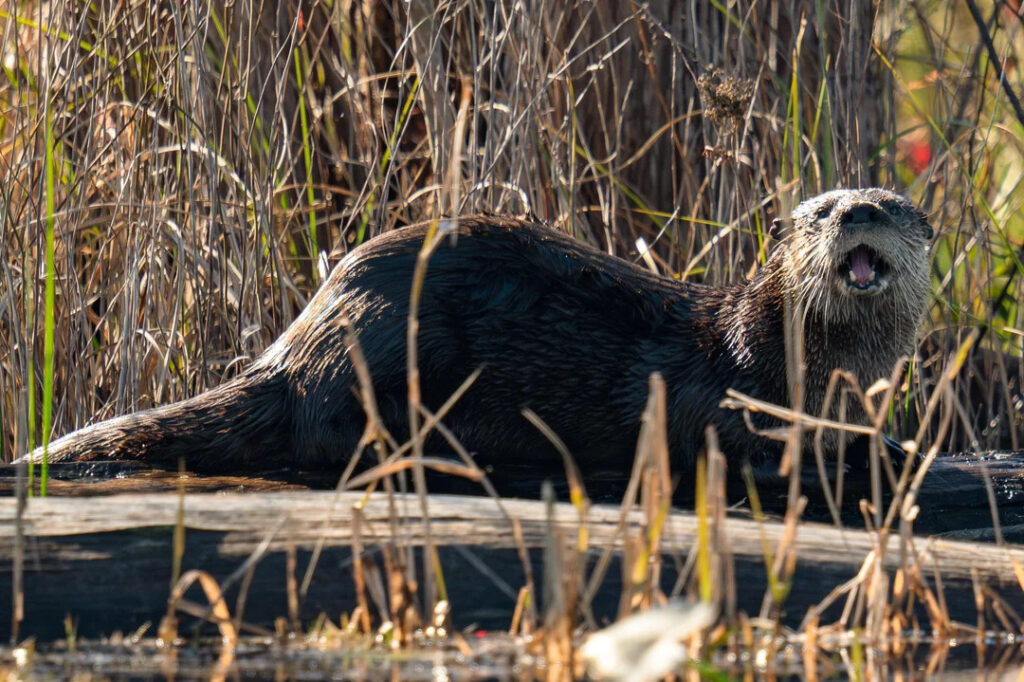
River Otters at Play
There is nothing quite like catching a family of river otters working a stretch of blackwater, since they move like the whole swamp is theirs to enjoy. They porpoise along the surface in little arcs, duck under without much of a splash, and pop back up somewhere a person was not expecting, often trailing a fish they are none too shy about eating right there in front of an audience.
Otters tend to show up where the water is calm and the fishing is good, which makes the edges of prairies and the quieter stretches off the main paddling routes a good bet. A paddler who kills their momentum and just drifts for a minute stands a real chance of watching a pair of otters roll and chase each other along the bank, playing in a way that looks suspiciously like fun for its own sake rather than anything useful. It is one of those sightings that gets a whole boat laughing out loud before anybody remembers to grab a camera.
Black Bears at the Wood’s Edge
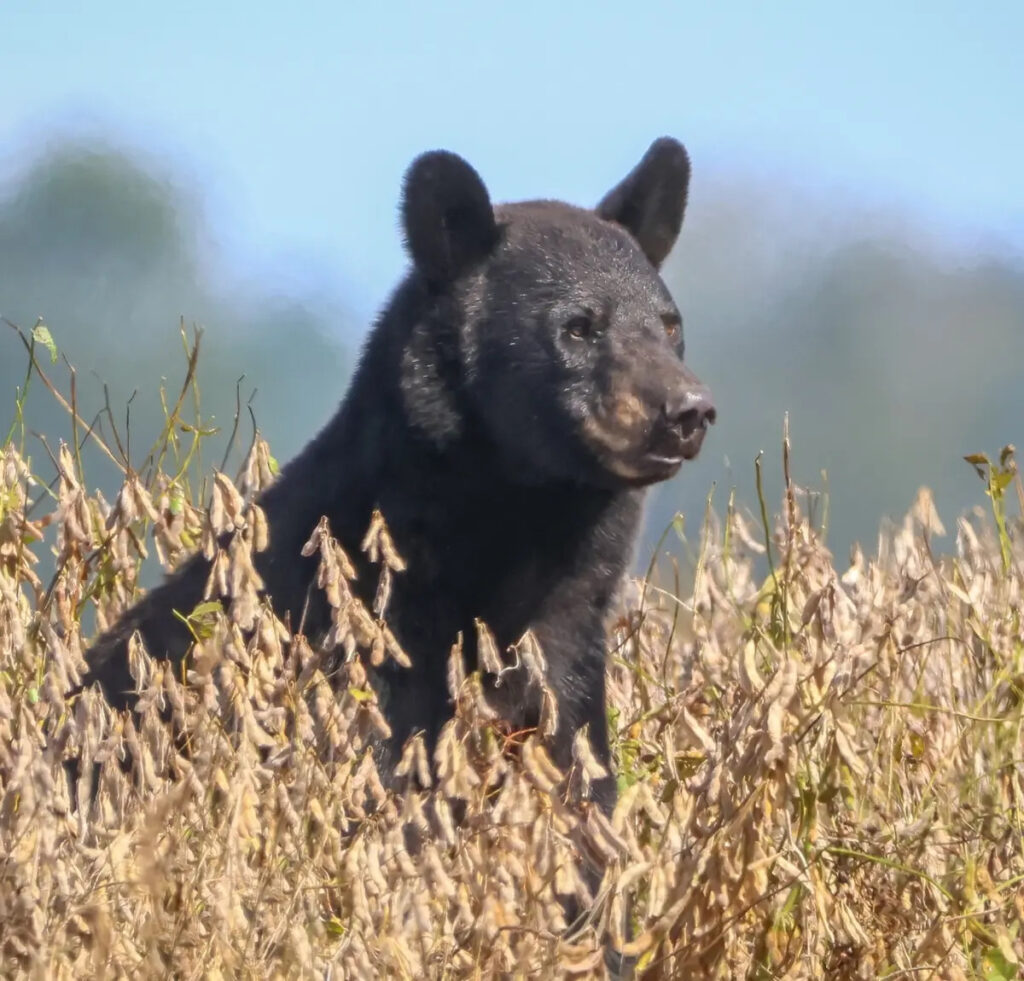
Most visitors do not think about bears when they picture the Okefenokee, but the refuge supports a healthy population, and they keep mostly to the upland forest edges where the swamp gives way to pine and hardwood. Dawn and dusk are the best windows, when a bear might be working the tree line for food and pays a distant boat or a quiet trail walker very little mind.
A sighting usually comes and goes fast, a dark shape moving unhurried through the brush before it works its way back into cover, and there is a particular kind of quiet that settles over a group right after, everybody a little wide eyed and talking low the rest of the trip. It is a reminder that the Okefenokee is not just a water feature. It is a genuine wilderness with everything that comes with that word, bears included.
Turtles, Basking and Otherwise
Turtles do not ask for much attention, which is exactly why they are easy to miss and always worth a second look. Florida cooters and striped mud turtles line up on logs in the sun looking like they are posing for a photograph nobody asked to take, sometimes stacked two and three deep on the same stretch of driftwood. Common snapping turtles keep a lower profile, more often spotted as a shadow moving along the bottom in shallow water than as anything sunning itself topside.
What makes turtle watching worthwhile is the stillness of it. A basking turtle will hold its pose for a long stretch, giving a paddler plenty of time to drift close and actually look instead of catching a blur out of the corner of an eye. It is a good reminder that not every sighting in the Okefenokee needs to move fast to be worth the trip.
Curious what else is out there waiting to be spotted? Reach out to Okefenokee Pastimes or check in on social media, since the front porch conversation usually turns up a sighting or two that never made it into any guide.
Pitcher Plants and the Swamp’s Carnivorous Side
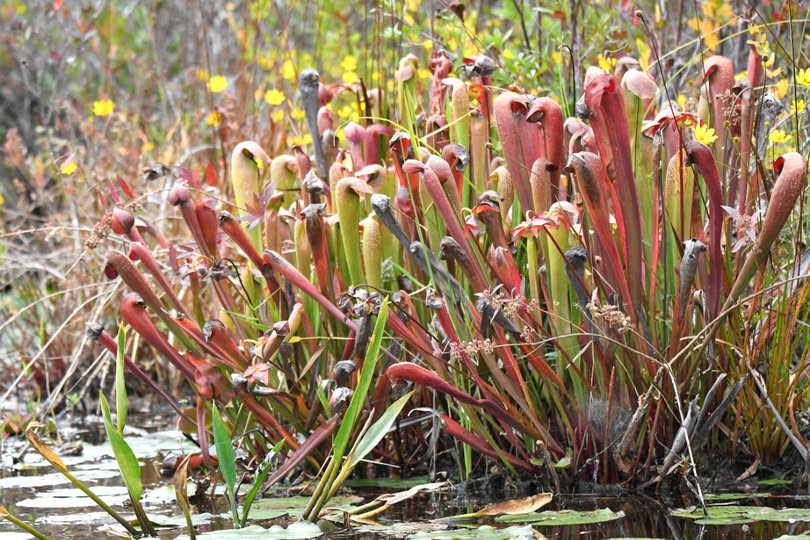
Down in the wetter, sunnier margins of the swamp, a different kind of wild is happening at ground level. Pitcher plants grow in patches that look almost otherworldly, their tall tubular leaves catching rainwater and digestive fluid to trap insects that wander in and never climb back out. It is genuine carnivorous plant country, and the pitcher plants share the ground with sundews, small sticky leaved plants that catch prey the same patient way.
These plants thrive in the nutrient poor, boggy soil along the swamp’s edges, and a slow walk with somebody who knows where to look turns up more of them than most visitors expect. Dragonflies flash electric blue and red just above the pitcher plant patches, drawn to the same insects the plants are after, and the whole scene moves at a pace so slow it barely registers as motion at all. It is a strange, quiet corner of the Okefenokee that most first time visitors never even know to look for, and it tends to be the detail people bring up first when they get home and start telling everybody about the trip.
A Quiet Word About Cottonmouths
No honest wildlife guide to the Okefenokee skips the cottonmouth, since the swamp is home to this venomous water snake and pretending otherwise does nobody any favors. They are part of the food web out here just like everything else, and sightings are not uncommon along boardwalks and quiet water edges. The right approach is simple. Stay on marked trails, keep a respectful distance, and let them be. Most encounters end the same way, with the snake moving off unbothered and the visitor with a good story to tell, so long as nobody goes looking for trouble.
Where to Rest After Watching the Quiet Ones
A day spent chasing otters, scanning the tree line for bears, and crouched down looking at pitcher plants works up a different kind of tired than a day spent gator watching, the slow, satisfied kind that comes from paying close attention. Okefenokee Pastimes sits close enough to the refuge that guests can be back at camp not long after the light starts to fade, gravel crunching underfoot at the truck before a cold drink and a porch rocker take over for the rest of the evening.
The cabins offer real air conditioning and a proper bed, which feels like a small miracle after a humid day spent crouched low in the grass. For guests who want to stay a little closer to the outdoors without giving anything up, the glamping tents split the difference nicely, with real furniture under canvas and the swamp’s evening chorus of frogs and crickets drifting in through the screen. The campground and RV sites suit the folks who brought their own rig, whether that means a fire ring conversation about the bear somebody swears they saw or an early bedtime ahead of a sunrise paddle. Okefenokee Pastimes also runs an open to the public restaurant right on site, so nobody has to drive back into town hungry after a long day out looking for the quiet stuff.
And once the sun is fully down, the swamp is not finished. With so little light pollution for miles around, the dark sky over camp fills up thick with stars, a fitting close to a day spent noticing all the things that do not shout for attention.
Ready to see the Okefenokee’s quieter side for yourself, from otters at play to pitcher plants working away in the grass? Book a stay at Okefenokee Pastimes and let a place that has always called this swamp home help put the whole trip together.