
If there is a landscape in the American South that stops photographers cold in their tracks, it is the Okefenokee Swamp. Spanning nearly 700 square miles across southern Georgia and northern Florida, the Okefenokee National Wildlife Refuge is one of the oldest and largest blackwater swamps on Earth and one of the most hauntingly beautiful places you will ever point a lens.
Whether you are a seasoned wildlife photographer or a passionate hobbyist, this guide covers everything you need to know: the best shooting spots, the ideal times of day, seasonal tips, and why staying at Okefenokee Pastimes Cabins & Campground puts you exactly where you need to be.
1. Why Okefenokee Is a Photographer’s Dream
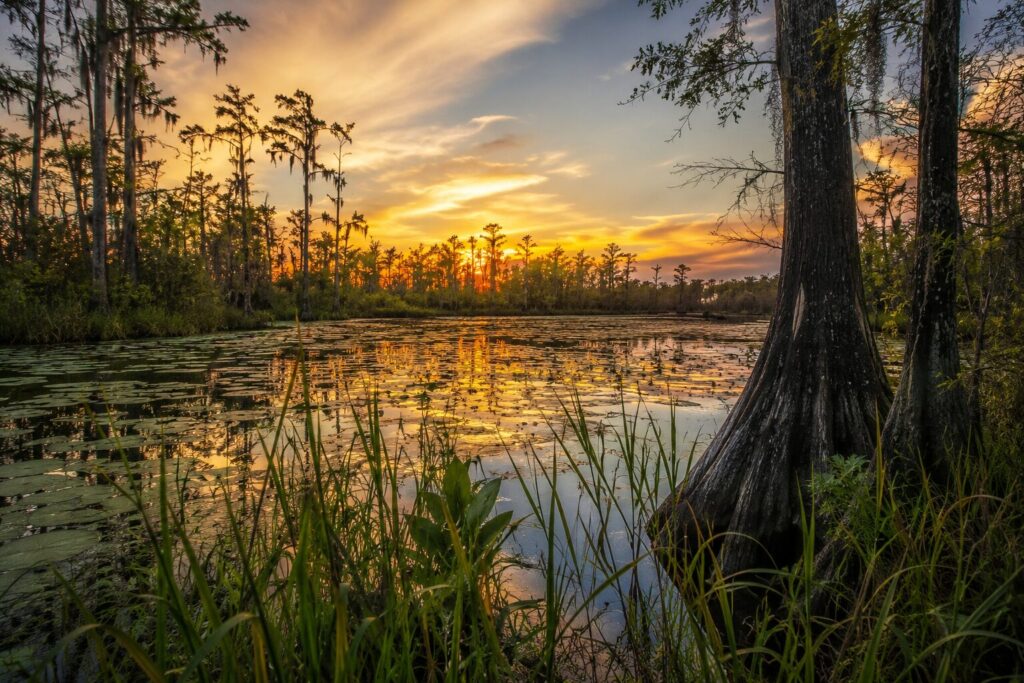
The Okefenokee is not just a swamp it is a living canvas. Ancient cypress trees draped in Spanish moss rise from mirror-still black water. Roseate spoonbills, sandhill cranes, great blue herons, and North American river otters share the same frame with basking alligators and rare carnivorous plants.
What makes Okefenokee truly special for photographers is its raw, untouched character. There are no crowds, no city lights, and no noise just pure wilderness. The tannin-stained water, darkened by decomposing vegetation, acts as a natural mirror, producing extraordinary double-exposure-style reflections at dawn and dusk. Few locations in the eastern United States offer this combination of dramatic wildlife, moody atmosphere, and wide-open skies.
2. Best Photography Spots Inside the Refuge
Suwannee Canal Recreation Area (East Entrance Folkston, GA): The most accessible and rewarding entry point. The main canal offers outstanding sunrise reflections. The observation tower gives an elevated view over the prairie and treeline ideal for wide landscape shots and spotting wading birds.
Chesser Island Boardwalk: An elevated walkway through open prairies and cypress bays. Walk slowly in early morning for close encounters with sandhill cranes, herons, and alligators.
Trembling Earth Nature Trail: Named for the floating peat islands that literally tremble underfoot. Ideal for macro photography carnivorous pitcher plants, dense cypress canopy, and bog ecosystems.
Canoe and Kayak Trails: Nothing gets you closer than paddling through the swamp itself. A waterproof housing or dry bag is essential. Drift silently past nesting birds and submerged logs.
3. Best Light: When to Shoot in Okefenokee
Golden Hour at Sunrise: The premier shooting window. Low morning light catches the top of cypress trees while the black water holds a perfect reflection of the pink and orange sky. Mist lingers above the water, adding an ethereal layer. Arrive before first light.
Overcast and Cloudy Days: Soft diffused light is ideal for alligators, turtles, and birds no harsh shadows or blown-out highlights. The muted tones of the swamp become richer under cloud cover.
Golden Hour at Sunset: Amber and gold paint the open prairies. The long shadows through cypress stands at dusk create powerful compositions. Stay until blue hour for silhouettes.
Dark Sky Stargazing & Night Photography: The area around the refuge has some of the darkest skies in the Southeast. The Milky Way is visible to the naked eye on clear moonless nights from late spring through summer. Astrophotographers can capture star trails over the black water or wide-angle Milky Way arches framed by cypress silhouettes.
4. Wildlife Photography Tips Specific to Okefenokee
Alligators: Everywhere and mostly unbothered by quiet observers. Use a telephoto lens (200–400mm). Early morning is best. Never position yourself between an alligator and the water.
Birds: 200+ species call the Okefenokee home. A 500–600mm lens works for wading birds at distance; 70–200mm handles boardwalk encounters well. Patience is the real skill.
Reflections: Shoot in calm wind conditions before 8 AM. Use a circular polarizing filter to control glare and deepen color saturation.
Be Quiet, Move Slowly: The swamp rewards stillness. Wildlife disappears at the sound of voices but returns if you wait silently for 10–15 minutes.
5. Seasonal Guide: When to Visit for Photography
| Season | Photography Highlights |
| Spring (March–May) | Baby alligators, nesting birds, wildflowers in bloom, cooler temperatures |
| Summer (June–August) | Peak Milky Way season for dark sky photography; lush green canopy |
| Fall (September–November) | Migratory birds, lower humidity, softer afternoon light |
| Winter (December–February) | Morning mist on cold snaps; fewer visitors; excellent bird activity |
Spring and fall are the most comfortable seasons for extended shoots, but summer nights are unmatched for stargazing and astrophotography.
6. Stay Close to the Action: Okefenokee Pastimes Cabins & Campground
One of the most important decisions a photographer makes is not what gear to pack it is where to stay. Being close to the Okefenokee’s east entrance at Folkston, Georgia means you can be on the water at first light without a long predawn drive.
Okefenokee Pastimes Cabins & Campground is ideally positioned for photographers who want to maximize every moment of usable light. Here is why it belongs in your photography trip plan:
- Wake Up Before Sunrise, Not Before the Alarm – Our cabins and campground sites are minutes from the Suwannee Canal entrance. No more missing the golden hour because your hotel was 45 minutes away.
- Dark Sky Access Right Outside Your Door – Our property sits under some of the darkest skies in Georgia. The Milky Way rises clearly on moonless nights, and our open grounds offer a clear southern horizon for astrophotography.
- Glamping Tents & Cabins for Every Photographer – Whether you want the comfort of a fully equipped cabin or the immersive experience of a glamping tent under the stars, we have lodging that fits your style. Power and Wi-Fi for backing up files are available.
- Campground for the Serious Adventurer – Wake up to bullfrogs, barred owls, and the distant call of sandhill cranes at first light. Walk to the water with camera in hand.
- A Community of Fellow Enthusiasts – Okefenokee Pastimes attracts wildlife lovers, birders, and photographers from across the country. Share tips, compare shots, and find out what was spotted at the canal that morning.
Ready to Photograph the Okefenokee?
The Okefenokee does not give its best light to those who rush in for an afternoon. It rewards those who stay who wake before dawn, who linger through golden hour, who watch the Milky Way wheel overhead from a folding chair beside the black water.
Make your trip count. Stay where the swamp starts.