Introduction: A Sky Worth Traveling For
Most people who live east of the Mississippi have never truly seen the night sky. Not really. The orange haze of city lights erases the Milky Way, flattens the constellations, and turns what should be one of humanity’s most profound experiences into a faint, forgettable glimmer. But drive south deep south, into the Georgia wetlands and something remarkable happens.
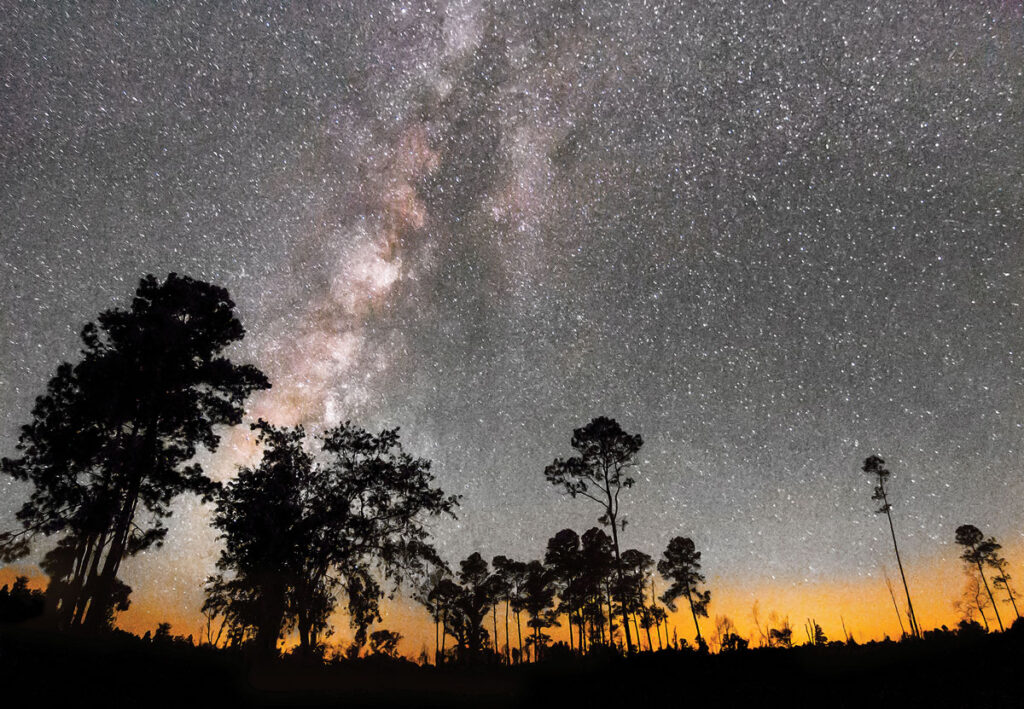
The Okefenokee National Wildlife Refuge, sprawling across 438,000 acres of ancient swamp along the Georgia-Florida border, sits inside one of the darkest remaining pockets of the entire eastern United States. Here, far from the sprawl of Atlanta, Jacksonville, and Savannah, the atmosphere holds almost no artificial light. On a clear night, the sky above the Okefenokee doesn’t just show stars it reveals the universe.
This is stargazing in South Georgia: raw, unhurried, and genuinely awe-inspiring. And with the right base camp a cabin, glamping tent, or campground site at Okefenokee Pastime the experience is more accessible than you might think.
Section 1: Why the Okefenokee Is a Rare Dark Sky Sanctuary
Light pollution is one of the most widespread and least-discussed forms of environmental degradation in the modern world. According to the International Dark-Sky Association, more than 99% of people in the United States and Europe live under light-polluted skies. The Milky Way has become invisible to roughly one-third of humanity.
The Okefenokee escapes this fate for a simple reason: it has almost nothing around it. Folkston, Georgia the small town that serves as the gateway to the refuge has a population of just a few thousand. The nearest major cities are hours away. Between the refuge and anything resembling an urban glow lies mile after mile of pine flatwoods, tidal rivers, and undeveloped coastal plain.
On the light pollution map, the Okefenokee region registers as Bortle Class 2 to 3 one of the darkest classifications possible for the eastern United States. At this level, the Milky Way is not just visible; it casts a faint shadow. The zodiacal light appears at dawn and dusk. Dozens of deep-sky objects nebulae, star clusters, even distant galaxies are visible with the naked eye.
✦ Bortle Class 2–3 darkness: among the darkest skies in the eastern U.S.
✦ Milky Way visible in full arc on clear nights
✦ Minimal atmospheric interference from nearby towns or highways
✦ Low humidity nights (fall through early spring) offer the clearest views
✦ Southern latitude gives access to constellations rarely seen from northern states
For context: most suburban locations in Georgia register Bortle Class 7 or 8. Atlanta’s core is Class 9 the worst possible. The difference between those skies and the Okefenokee’s is not subtle. It is the difference between a whisper and a symphony.
Section 2: What You’ll See and When to Come
The Okefenokee is a year-round stargazing destination, but the experience shifts with the seasons. Understanding what’s overhead and when helps you plan a visit around the celestial events that matter most to you.
Fall & Winter (October – February): The Prime Season
Autumn and winter deliver the most consistently clear skies in South Georgia. Lower humidity means less atmospheric haze, and the nights are long. Orion dominates the southern sky by December, flanked by Sirius the brightest star in the night sky blazing near the horizon. The Pleiades cluster sparkles overhead. In November, the Leonid meteor shower produces reliable shooting stars; in December and January, the Geminids and Ursids offer some of the best meteor shower viewing of the year. Temperatures range from comfortable to cool perfect for bundling up outside a cabin or glamping tent with a hot drink and a clear view of the stars.
Spring (March – May): Milky Way Season Begins
As winter loosens its grip, the galactic core of the Milky Way begins rising in the southeast before dawn. By April, early risers can catch the core arcing brilliantly above the swamp’s cypress silhouettes. Spring also brings warmer nights and the return of the Okefenokee’s spectacular wildlife, meaning a single evening can include gator silhouettes on dark water and a sky blazing with stars a combination found almost nowhere else on Earth.
Summer (June – August): Full Milky Way, Heat & Humidity
Summer is peak Milky Way season the galactic core is at its most dramatic from June through August, positioned high in the south by midnight. Heat and humidity can introduce some atmospheric haze on the haziest nights, but clear summer nights at the Okefenokee remain exceptional. The Delta Aquariid and Perseid meteor showers in late July and August are crowd favorites. If you’re comfortable with warm nights and determined to see the Milky Way at its most spectacular, summer delivers.
Section 3: How to Make the Most of Your Dark Sky Night
You don’t need a telescope to have a profound stargazing experience at the Okefenokee. The naked eye, given true darkness and 20 minutes to adapt, reveals more than most people have ever seen. That said, a few simple preparations make the experience significantly richer.
✦ Red-light headlamp: White light destroys night vision in seconds. A red headlamp lets you move around safely without resetting your eye’s dark adaptation.
✦ Star chart app: Apps like Stellarium (free at stellarium-web.org) identify constellations, planets, and deep-sky objects in real time using your phone’s compass.
✦ Reclining chair or blanket: Staring straight up for extended periods is exhausting. A reclining camp chair or a blanket on the ground makes it sustainable.
✦ Binoculars (7×50 or 10×50): Even modest binoculars transform the view craters of the moon, Jupiter’s moons, the Andromeda Galaxy, and star clusters snap into crisp focus.
✦ Layers: Even in summer, the Okefenokee cools noticeably after midnight. In fall and winter, temperatures can drop into the 40s. Dress for temperatures 10 degrees cooler than the day forecast.
✦ Check the moon phase: A full moon washes out fainter stars and the Milky Way. Plan your visit around the new moon for the darkest possible sky.
Pro tip: The Okefenokee’s flat, open prairies and boardwalk areas offer unobstructed 360-degree horizon views ideal for watching meteor showers or catching planets rising in the east.
Section 4: The Okefenokee vs. Other Southeast Stargazing Spots
The Southeast isn’t short on beautiful places, but truly dark skies are harder to find than most people realize. The Okefenokee stands apart from other regional options for several compelling reasons.
Compared to the Appalachian Mountains
The Blue Ridge and Smoky Mountains are popular stargazing destinations, but elevation doesn’t automatically mean darkness and much of the southern Appalachian region has grown significantly in surrounding development over the past decade. The Okefenokee, by contrast, is surrounded by tens of thousands of acres of protected federal land with no development pressure on its darkness. And unlike mountain locations, the Okefenokee is flat which means 360-degree horizon-to-horizon sky views that mountaintop sites can’t offer.
Compared to Florida’s Dark Sky Parks
Florida has made admirable strides in Dark Sky designation, but most of the state’s certified parks sit on increasingly developed peninsulas, with the glow of coastal cities bleeding into the southern and eastern horizons. The Okefenokee’s position in the interior of the South Georgia coastal plain gives it darkness in nearly every direction a rarity anywhere on the East Coast.
What Makes the Okefenokee Unique
The combination of geographic isolation, protected federal wilderness, flat open terrain, and proximity to a full-service glamping, cabin, and campground destination is, frankly, rare. Most truly dark skies require backcountry camping and significant physical commitment to access. The Okefenokee, with Okefenokee Pastime’s on-site lodging makes exceptional stargazing available to anyone: families, first-timers, couples on a weekend escape, and seasoned astronomers alike.
Section 5: The Okefenokee After Dark Stars Meet Wildlife
Stargazing at the Okefenokee is never just about the sky. The swamp after dark is alive in ways that add an entirely different dimension to the experience one that no observatory or dedicated dark-sky park can replicate.
As the sun drops below the cypress line, the daytime sounds give way to the night shift. Barred owls call across the swamp in their unmistakable who-cooks-for-you chorus. Chuck-will’s-widows flit through the darkness catching insects. Alligators settle into the warmth of the water, occasionally surfacing with a quiet ripple. And across all of it the stars emerge, one by one, until the sky is so thick with light it barely seems real.
There is something genuinely rare about sitting outside your glamping tent or on your cabin porch, listening to the Okefenokee wake up for the night while the Milky Way wheels overhead. It is one of those experiences that reminds you viscerally of the scale of the natural world and your place inside it.
Firefly season (May through July) adds yet another layer: thousands of synchronous fireflies pulsing in the swamp’s edge vegetation, their cold green light echoing the stars above. During peak firefly nights, the boundary between earth and sky seems genuinely blurred.
Section 6: Getting There – Planning Your South Georgia Dark Sky Trip
The Okefenokee National Wildlife Refuge is located in Folkston, Georgia the seat of Charlton County in the southeastern corner of the state. It sits approximately:
✦ 4.5 hours south of Atlanta, GA
✦ 2 hours west of Savannah, GA
✦ 1 hours northwest of Jacksonville, FL
✦ 15 minutes north of the Florida state line
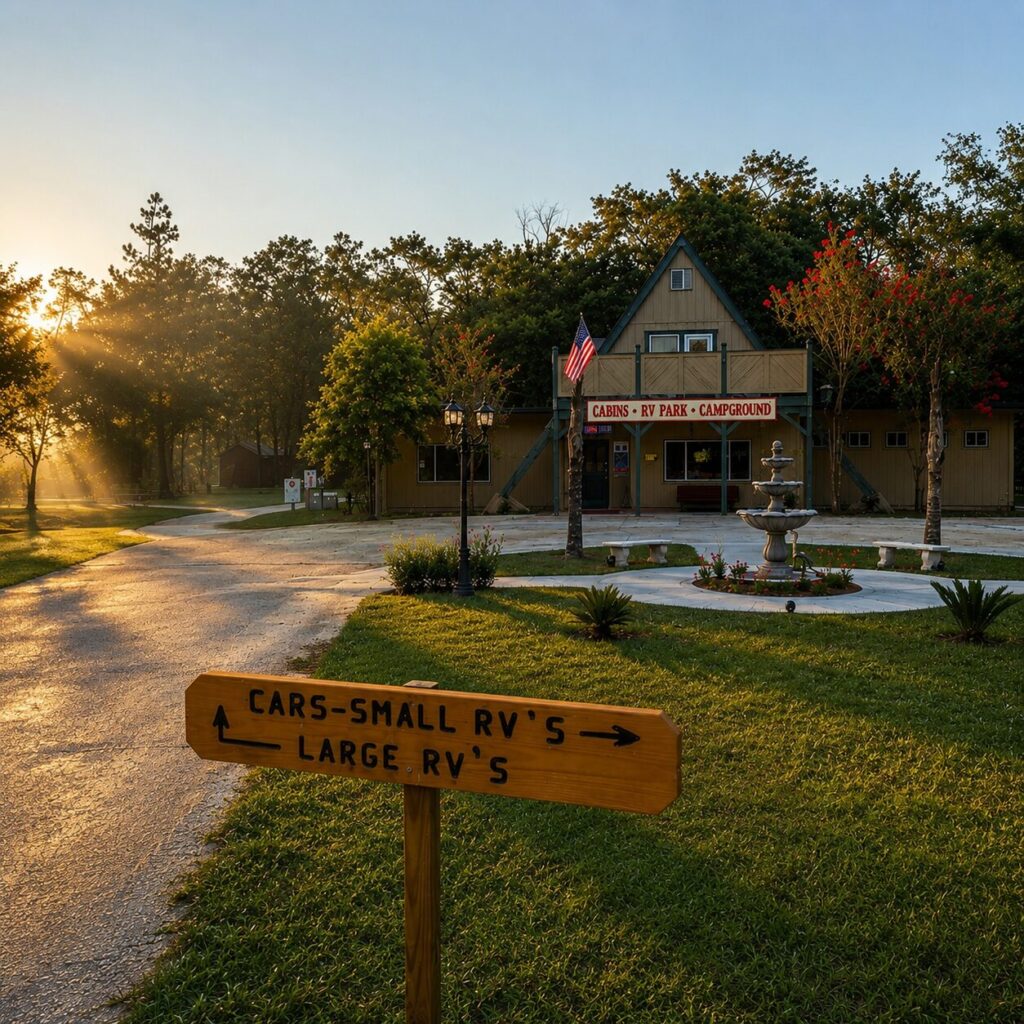
Folkston is small and intentionally unhurried which is precisely what keeps the skies dark. The town has essential services (fuel, grocery, pharmacy), and Okefenokee Pastime Cabins & Campground is located just minutes from the main refuge entrance on the eastern edge of the swamp.
The nearest major airports are Jacksonville International (JAX) and Savannah/Hilton Head International (SAV), both roughly 45–120 minutes away. The drive in is part of the experience as you leave the last highway interchange behind, you’ll notice the horizon darkening, the traffic thinning, and the stars if you’re arriving after sundown beginning to appear overhead in numbers that will make you pull over and look up.
Best arrival tip: Time your drive to arrive at dusk on a new-moon night. The first sight of the Okefenokee sky is one you’ll want to experience before the fatigue of unpacking sets in.
Okefenokee Pastime Cabins & Campground: Your Dark Sky Base Camp
Experiencing the Okefenokee’s legendary night sky requires being there which means where you stay matters. Okefenokee Pastime Cabins & Campground is purpose-positioned to give you the fullest possible dark sky experience, combined with the comfort and convenience that makes a multi-night stay genuinely enjoyable.
🌌 Glamping Tents Built for Night-Sky Immersion
Our glamping tents are positioned away from any light sources, with open sky views that make them ideal for stargazers. Step outside your tent after midnight and the Milky Way is directly overhead no driving, no hiking, no dark-adapted eyes wasted on headlights. Each glamping tent includes a comfortable bed, climate control, and private outdoor space, so your night under the stars ends in genuine rest. This is glamping designed around the sky above you, not just the swamp beside you.
🏡 Cabins with Private Porches Facing the Darkness
Our cabins offer the most comfortable way to spend multiple nights in the Okefenokee, and their private porches face open sky with no competing light sources nearby. Set up a reclining chair, pour a drink, and spend the evening watching constellations arc across the horizon. The cabins are fully equipped for a week-long stay ideal for families or couples who want to combine a dark sky trip with daytime refuge exploration, wildlife photography, and paddling.
🏕️ Campground Sites Under a Canopy of Open Sky
The campground at Okefenokee Pastime offers shaded sites by day and crucially unobstructed sky views by night. Mature longleaf pines define the perimeter without blocking overhead views, and the absence of any campground-wide lighting means your dark adaptation stays intact from sunset to sunrise. Tent campers and RV guests alike report that the Okefenokee campground sky is one of the reasons they return year after year.
📍 Minutes from the Refuge On the Edge of the Dark Zone
Staying on-site at Okefenokee Pastime means you’re already inside the dark sky zone the moment you arrive. There’s no drive to a dark-sky viewing area, no navigating rural roads in the dark, and no concern about arriving late and losing your spot. You unpack, settle in, and look up. The refuge itself boardwalks, canoe trails, and wildlife observation platforms is minutes away for daytime exploration that makes the stargazing nights feel even more earned.
🔭 Community of Night-Sky Enthusiasts
Okefenokee Pastime attracts guests who value the natural world birders, paddlers, photographers, and yes, dedicated stargazers. During peak new-moon weekends, it’s common to find several guests independently set up with binoculars or small telescopes, sharing views of Saturn’s rings or the Andromeda Galaxy. The campground’s relaxed culture and absence of noise ordinance violations means you can stay outside as late as the stars keep you and they will keep you.
🌿 Year-Round Access to One of the Southeast’s Rarest Skies
Unlike mountain dark-sky destinations that close seasonally or require technical hiking, Okefenokee Pastime is open and welcoming year-round. Whether you’re chasing the winter Milky Way core, the peak summer galactic arc, or the meteor showers of November and August, the Okefenokee is accessible and Okefenokee Pastime has a cabin, tent, or campground site waiting for you.