
Ask anybody who grew up along Hwy 121 near the refuge gate and they will tell you the same thing. An alligator is not really wildlife around here so much as a neighbor nobody ever formally introduced you to. Folkston kids learn the rules about gators about the same age they learn to watch for a train rumbling through town, early, and without a whole lot of fuss made over it. The Okefenokee holds somewhere between twelve and fifteen thousand alligators tucked into its blackwater and cypress shadows, and everybody who steps onto a boardwalk or slides a kayak into the Suwannee Canal is a guest in that arrangement, whether they realize it or not. This guide is not here to scare anybody off the water. It is here so a first encounter with an Okefenokee alligator turns into the kind of story a person tells with a grin over supper, instead of the kind that ends with a call to the ranger station.
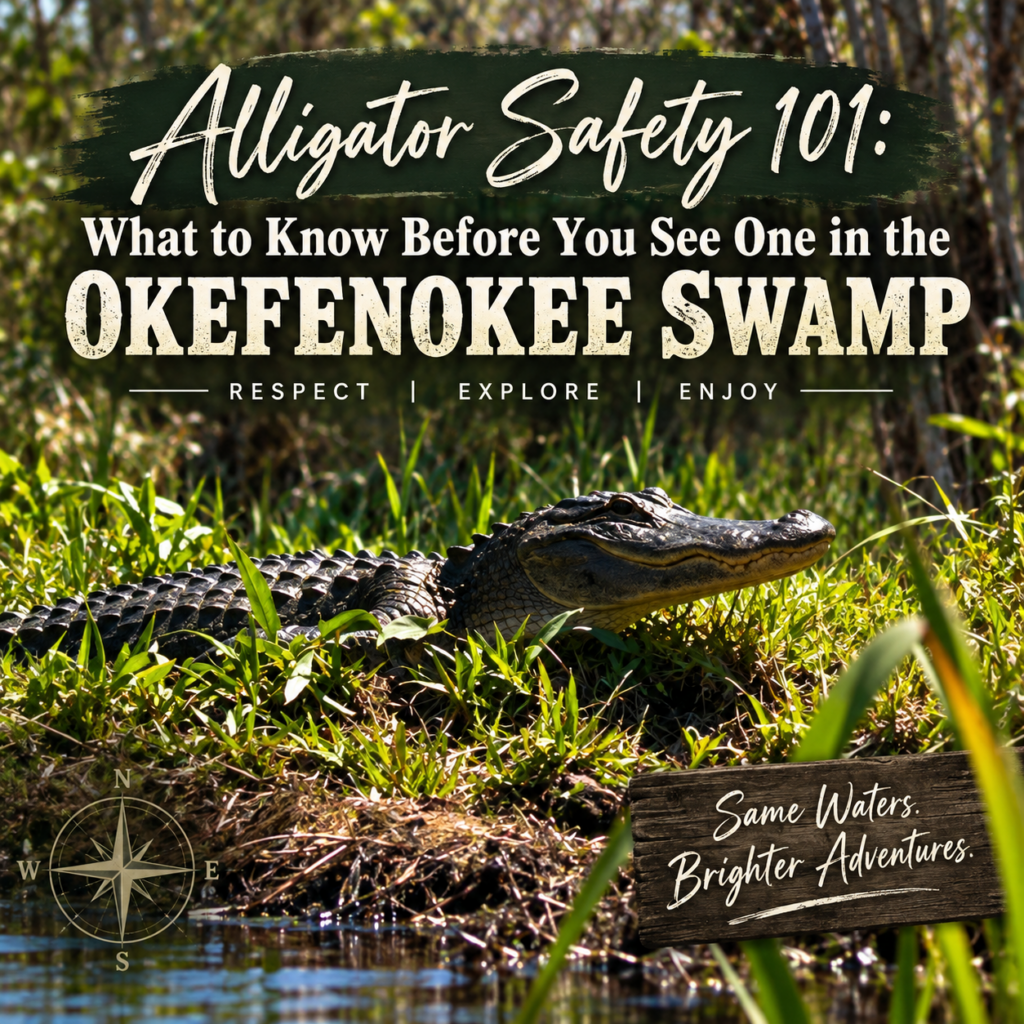
Growing Up with Gators: Why Alligators Are Just Part of Life Around Here
Around Folkston, seeing a gator sunning itself on a log is about as remarkable as seeing a cow in a pasture, which is to say it gets a glance and then everybody goes back to what they were doing. Locals will tell you the swamp does not hide its alligators so much as it simply lets them be, drifting motionless through lily pads or hauled out on a mudbank with their mouths cracked open to cool off in the heat. There is a particular stillness to spotting one for the first time, the kind where a visitor’s whole body goes quiet and their eyes go wide, right before somebody in the group hollers “gator” from the dock loud enough to make the herons scatter.
What locals know, and what this guide wants every visitor to walk away knowing too, is that alligators are not lurking around looking for trouble. They are cold blooded animals conserving energy, warming themselves in the sun, and mostly wanting to be left alone to do exactly that. Respect goes both directions out here. The swamp asks visitors to keep their distance and use good sense, and in exchange it hands over some of the best wildlife watching in the entire Southeast. For a fuller look at everything else sharing the water with the gators, from herons to river otters, our guide to the Okefenokee’s wildlife is worth a read too.
How to Read a Gator: Understanding Behavior Before You Meet One
An alligator floating with just its eyes and nostrils above the tea colored water is not doing anything sinister, that is simply how they rest and regulate their body temperature. A gator hauled out on a bank with its mouth open, sometimes called gaping, is cooling itself down the same way a dog pants. None of that is aggression. What visitors should actually watch for is a gator that has stopped ignoring people, one that lifts its head and holds a fixed stare toward a person or a pet, or one that starts moving deliberately in that direction instead of drifting off. That shift from ignoring a person to watching one closely is the signal to back away calmly and put more distance between yourself and the water’s edge.
Alligators get more active and more visible in the warmer months, especially during spring mating season when the swamp fills with a deep bellowing call that rolls across the prairie and rattles a person right down to the ribs the first time they hear it up close. Summer mornings and late afternoons tend to bring the most movement, as gators shift between sunning and hunting. None of this means the swamp gets more dangerous in summer. It just means alligators are simply more visible doing what alligators do, and visitors should stay a little extra alert. The refuge itself publishes solid guidance on safe viewing distance that is worth a look before any trip.
On Land: Boardwalks, Docks, and Campsites
Most alligator encounters at the refuge happen exactly where they are supposed to, from a respectful distance on a boardwalk or overlook, and that is exactly how it should stay. A few habits keep it that way.
Stay on marked boardwalks and trails rather than cutting down toward the water’s edge for a closer photo. Keep children within arm’s reach near any dock, canal bank, or shoreline, since a small child moving quickly along the water’s edge can catch a gator’s attention in a way an adult walking calmly does not. Leash dogs and keep them well back from the water at all times, because to an alligator a small dog can look a whole lot like an easy meal, and this is one rule locals never bend on. Never, under any circumstances, feed an alligator or toss food scraps near the water’s edge. A fed gator is a gator that starts associating people with dinner, and that habit is nearly impossible to undo once it sets in, which makes feeding both illegal at the refuge and genuinely dangerous for the next family that walks by.
At the campground or out at a platform site, keep coolers and food secured, clean up cooking areas promptly, and give any nearby water a wide berth after dark, since alligators tend to move and feed more actively once the sun goes down and the swamp settles into its nighttime hush. Georgia’s Wildlife Resources Division keeps a GatorWise safety checklist that covers these same habits statewide, and families traveling with young kids may also want our family camping guide for more on keeping little ones safe around the water.
On the Water: Paddling and Boating Around Alligators
Kayaking and canoeing put a person closer to alligator territory than any boardwalk ever could, and that closeness is exactly why the water trails feel so alive. It also means a little extra care goes a long way. Approach floating vegetation mats and grassy banks slowly, since those are prime basking spots, and never paddle directly toward a gator to get a closer look or a better photo. Give a wide berth to any alligator near a nest or visibly guarding young ones in late summer, as a mother gator protecting babies is the one situation where an otherwise calm animal will act defensively without much warning. Keep hands, feet, and fishing lines inside the boat rather than trailing in the water, and secure any bait or catch quickly rather than letting it dangle over the side.
Paddlers heading out at dawn should expect the most alligator activity of the whole day, since that is prime warming time, and the tannin dark water combined with early light makes for the kind of alligator sighting that photographs beautifully from a safe distance. A slow, steady paddle stroke and a calm, quiet voice keep both the wildlife and the moment exactly the way visitors picture it before they arrive. Planning a longer trip around the paddle? Our 3-Day Okefenokee Itinerary walks through exactly that, and the Activities page has details on rentals and guided tours to get you on the water.
What to Do If a Gator Gets Close, and What Never to Do
If an alligator surfaces closer than expected while paddling or wading near a bank, the right response is almost always the same, calmly increase distance, avoid sudden splashing or loud noise, and let the animal go about its business. Alligators are not interested in chasing down a kayak or a person moving away from them. What they will react to is cornering, splashing, or being approached at close range, so giving ground is never a sign of weakness out here, it is simply good sense.
Never attempt to touch, feed, or pose near an alligator for a photo, no matter how still or sleepy it looks sunning on a log. Never swim in the refuge outside of designated areas, since the swamp’s water is alligator habitat first and recreation space second. And never assume a gator lying motionless has lost interest, since alligators can move in a sudden burst from a dead stop, even though most of their day is spent doing exactly nothing at all.
Where to Rest Easy After a Day Near the Gators: Okefenokee Pastimes Cabins and Campground
After a day spent respecting the swamp’s rules, watching gators glide along a canal, and maybe jumping half a foot when one of them bellowed somewhere off in the prairie grass, there is a particular relief in pulling into somewhere close by that already understands exactly what kind of day a person just had. That is Okefenokee Pastimes Cabins and Campground, sitting just off Hwy 121 near the main gate of the refuge in Folkston, Georgia, close enough that the drive back from a day near the gators takes minutes instead of an hour.
The cabins offer real air conditioning and a real bed, which starts to feel like the finest invention in the world after a humid afternoon spent watching alligators from a respectful distance. Sinking into a porch rocker with a cold drink sweating in hand, listening to the evening cicadas wind up while the swamp settles into its nighttime rhythm, is its own kind of reward. For visitors who want to lean further into the outdoors without giving up comfort, the glamping tents split the difference nicely, with real furniture under canvas and the swamp’s night sounds still right there outside the screen. The campground and RV sites suit the folks who want their own rig and their own routine, whether that means a quiet fire and a story about the gator spotted earlier, or an early bedtime ahead of a sunrise paddle.
Okefenokee Pastimes also runs an open to the public restaurant right on site, so nobody has to drive back into town hungry after a long day near the water. A hot plate of food after a day spent respecting the swamp’s residents, followed by bacon popping in a skillet the next morning before another launch, rounds a visit out the way a good Okefenokee trip should.
The Swamp After Dark: Gators, Frogs, and a Sky Full of Stars
Once the sun drops and the day’s alligator sightings turn into supper table stories, the Okefenokee has one more trick up its sleeve. This is one of the darkest corners of Georgia, and once full dark sets in, the night sky opens up in a way most visitors have never seen away from city lights. The Milky Way shows up plain overhead, stars stack up thick above the tree line, and the whole swamp seems to hold its breath under it, aside from the frogs tuning up and the occasional distant bellow drifting across the prairie.
Guests at the campground often find themselves out at the fire ring long after dinner, necks craned back at the dark sky, half listening for that low rolling call across the water and half just enjoying the quiet. It is a fitting way to close out a day that started with a healthy respect for a twelve foot reptile and ended up under some of the best stargazing the state has to offer. For more ways to round out a visit, our Things To Do Nearby page covers what else is worth building into the trip.
Ready to see the Okefenokee’s gators for yourself, then rest easy afterward in a comfortable cabin, glamping tent, or campground site under a genuinely dark sky? Book a stay at Okefenokee Pastimes and let a family that has always called this swamp home help you plan a visit that respects the wildlife and still gets you a good night’s sleep.